Tirana |
 Tirana
is the capital of Albania and also the most important political,
economic and cultural centre of the country. It is located in a very
favorable position, right in the centre of the country, at an altitude
of 113 meters above the sea level. Tirana
is the capital of Albania and also the most important political,
economic and cultural centre of the country. It is located in a very
favorable position, right in the centre of the country, at an altitude
of 113 meters above the sea level.
|
 Tirana
is the capital of the Republic of Albania, with a population of just
over 700.000, lies at the foot of “Dajti” mountain (1612m) at 110 m
above the sea level. The region of Tirana has been inhabited since the
Neolithic period. Tirana was founded in 1614. The construction of Ethem
Bey’s Mosque, situated at the present day Scanderbeg square, began in
1789. Tirana was proclaimed capital of Albania in 1920. The population
of Tirana had 17.000 inhabitants at that time. Tirana
is the capital of the Republic of Albania, with a population of just
over 700.000, lies at the foot of “Dajti” mountain (1612m) at 110 m
above the sea level. The region of Tirana has been inhabited since the
Neolithic period. Tirana was founded in 1614. The construction of Ethem
Bey’s Mosque, situated at the present day Scanderbeg square, began in
1789. Tirana was proclaimed capital of Albania in 1920. The population
of Tirana had 17.000 inhabitants at that time.It is the most important political, economic, educational and cultural center of the country. Tirana is the capital of Albania and also the most important political, economic and cultural centre of the country. It is located in a very favorable position, right in the centre of the country, at an altitude of 113 meters above the sea level. To the west, the Adriatic Sea and the largest and most popular beach in Albania, the Durrës beach, are only 32 km away, while to the East, the Dajti Mountain, 1612 m high, is only 26 km away. Tirana is a relatively young city. It was founded in 1614 by Suleyman Pasha Bargjini, a local feudal lord who built the first buildings that formed the nucleus of the new town: a mosque, a hammam, and a bakery, at the place where today is the monument of the Unknown Partisan (Partizani i Panjohur). In 1816, the town was ruled by the Toptani family. The most important date in the history of Tirana is 11 February 1920, when the Congress of Lushnja proclaimed it the provisional capital of Albania, which was changed into a full status in 1925.  After
this decision the city has known constant growth, which reached
unprecedented rates in the 1990s. The Tirana downtown was designed by
well-known Italian architects of the Mussolini period. The Big Tirana
Boulevard "Dëshmorët e Kombit" (Martyrs to the Nation) was built in
1930, while the main square in the centre, Skanderbeg Square, was built
during 1928-1929. After
this decision the city has known constant growth, which reached
unprecedented rates in the 1990s. The Tirana downtown was designed by
well-known Italian architects of the Mussolini period. The Big Tirana
Boulevard "Dëshmorët e Kombit" (Martyrs to the Nation) was built in
1930, while the main square in the centre, Skanderbeg Square, was built
during 1928-1929.In commemoration of the 500th anniversary of the death of the Albanian National Hero, Skanderbeg, an equestrian monument was placed there in his honour. In 1988, a monument of the former communist dictator was also placed in the square, but it was toppled on 20 February 1991, by students and the people of Tirana. Important buildings in Tirana include the Palace of Congresses, the International Centre of Culture, the Palace of Culture and the Theatre of Opera and Ballet, the Sky Tower etc., as well as government buildings of the Council of Ministers, Presidency and Parliament. In addition to the Great Park in the southern part of the city, Tirana has other parks such as Rinia (Youth Park), the Parliament Park, the park close to the Presidency building, etc. Tirana is a major convention, conference and seminar centre in Albania. Also, owing to its young and student population, Tirana has an attractive night life offering a variety of restaurants, cuisines, bars, pubs and night clubs to visitors and locals alike. |
Wednesday, October 31, 2012
Albania - Tirana

Albania....friendly Albania....beautiful Albania
Albania....friendly Albania....beautiful Albania
 I woke very early (I'll have a word with that cockerel later) in a
seemingly utopic, very rural, very isolated verdant mountain valley.
For a brief moment the steep, jagged mountains carpeted in dense, green
woodland that towered impressively all around echoed with just the sound
of silence. I was of course still half asleep, the family of the
farmstead where I was staying were already busy (things start very early
in Albania) in the kitchen preparing breakfast, their sheep were
wandering around doing "sheep stuff", the turquoise coloured mountain
river thundered in the distance and smoke was rising willowy from the
chimneys of the couple of other wooden roofed houses that call this
unspoiled valley home. And, there was the sound of my still happily
snoozing, fellow intrepid trekkers.
I woke very early (I'll have a word with that cockerel later) in a
seemingly utopic, very rural, very isolated verdant mountain valley.
For a brief moment the steep, jagged mountains carpeted in dense, green
woodland that towered impressively all around echoed with just the sound
of silence. I was of course still half asleep, the family of the
farmstead where I was staying were already busy (things start very early
in Albania) in the kitchen preparing breakfast, their sheep were
wandering around doing "sheep stuff", the turquoise coloured mountain
river thundered in the distance and smoke was rising willowy from the
chimneys of the couple of other wooden roofed houses that call this
unspoiled valley home. And, there was the sound of my still happily
snoozing, fellow intrepid trekkers.Wandering around the lovingly planted fields of the farmstead, with it's rustic outbuildings I looked back to soak up this scene of bucolic, mountainous nirvana. Just a handful of scattered traditional farmstead homes occupy the valley floor, out of which rise sharply The Accursed Mountains of northern Albania, a sight I'd be wishing to see for many years. I was here at last, and everything seemed just perfect. This was definitely a "glad to be alive" day.
Seeing me wandering around, the owner of the farmstead (Deda our host) came out to greet me with a bottle of his Raki, a rather potent home-brewed (and home grown for that matter) clear brandy. It is the Albanian way to start the day with a shot of Raki (they say it's good for the digestive system for one!), so "when in Rome?" I thought to myself reinforced with the lame excuse that it would rude to refuse. Toasting each other's health thus the day began and I have to admit I felt more than a bit smug being able to enjoy a bit of the famed Albanian Highlander hospitality and friendliness I'd read so much about all by myself.
I felt like I'd been here in Nderlysa a lifetime, but in fact our group of trekkers had arrived just the night before after trekking through the Boga Valley, then up and over the Diagonal Pass to then descend sharply through forest into the delightful Kaprea Valley below.
It's the beginning of June 2010 and I'm here in the far north of Albania with a handful of adventurous trekkers on Walks Worldwide's "research and reconnaissance" trek into the Accursed Mountains that border Montenegro. We're not the first group of trekkers here by a long shot, but the locals tell us wherever we go that this is the first time they've encountered a commercial trekking group coming to the north with a UK Trekking Operator. Whether that's true or not I couldn't say. Although throughout the entire trip we didn't actually encounter a single other person trekking on the trails we followed, and could count on one hand the number of "foreigners" we actually met during our time in Albania. Of course people come here trekking. If they didn't there'd be nowhere to stay for one! But, not many come here that's for sure compared to other places in Europe and the rest of the world for that matter. For me trekking is naturally a pleasure and something I've been doing around the world for over 30 years, but it's also my business too and amongst my "Trekking Industry" mates, not a single one had been trekking in Albania, and as we do like to score "brownie points" against one another by going to places the others haven't, Albania is currently mine and Walks Worldwide's "brownie point".
Back to Albania. What a wonderful country, and what fantastically friendly and welcoming people. It's a country of contrasts from the ultra-modern, chic bars and cafes of the capital Tirana, to the isolated, remote, rural north where life (in spite of my depiction of a rural idyll) remains hard, especially in winter. However, it is the determined, stoic, hard-working nature and character of the people of the north that makes them such a pleasure to meet.
Throughout our trek in the Accursed Mountains we had to constantly keep reminding ourselves that we were in fact in Europe. Life for the local people we found to be similar to life in remote Himalayan villages for example. Our new friends, the family in Nderlysa being a good example. Our host, Deda, the father of the family runs a small farmstead. Self-sufficiency is an absolute necessity to survive. The family keep around 40 sheep, a few cows and grow all the seasonal vegetables they need. They have electricity from a local hydro-powered source and the freshest, mountain purified spring water you could wish for. For them their nearest shop is almost 5 hours drive away, and it's not a straightforward 5 hours at that either. They must either walk out the way we walked in or drive a perilous, appallingly bombed out, single track, rocky mountain road to connect with the outside world. It's the only way in and out really and until this improves it certainly also keeps all but the most intrepid of tourists away too. During the snows of winter the inhabitants of the valley are effectively cut-off and from October to early May the younger children of Deda's family go and live with relatives in the northern city of Shkodra. For those adventurous tourists that do venture into the Accursed Mountains, until things change there remains a place that is a seriously special, preserved part of Europe. In fact life is so tough here that many of the families that live in the valleys of the Accursed Mountains have either left for good, or return only in the summer months.
Deda and a few other farmstead owners in Thethi Valley however realised that the right sort of tourism would be a good way of preserving the traditional way of life for the valleys, as well as providing a great experience for their visitors too and converted parts of their farmstead to provide accommodation. With the aid of grants Deda has created two western European style bathrooms, with showers, sit-down toilets, wash basins and hot water, as well as simple bedrooms for visitors to sleep in. One can only imagine the sight of beds, tiles, toilets, plumbing materials etc coming over that dodgy mountain road!
For us as visitors it was both a privilege and a genuine travel experience to stay in farmsteads like Deda's along the way. Virtually everything we ate was grown or raised on the farmstead, and prepared by the family in their small kitchen. We certainly ate well and hearty! Absolutely delicious sheep cheese, home-made and freshly baked bread, vegetables straight from the garden that tasted like vegetables should, succulent meats, chunky soups and copious amounts of Turkish style coffee and fragrant "Chai", a tea-like brew made from the herbs that grow on the mountain slopes.
The Accursed Mountains themselves are truly spectacular. Seemingly impenetrable, jagged karstic peaks, broody and looking more like they are 4000m high than 2500m, as they rise so abruptly and sharply from the low valley floors. Trekking amongst these hostile looking mountains is quite challenging, steep ascents to passes, but efforts usually rewarded with incredible panoramic views, along with that self-satisfaction of knowing that you're trekking off the beaten track and have these incredible mountains and valleys almost to yourself and you feel like you've earned the right to be here. The Accursed Mountains are the realm of the committed mountain trekker and most certainly not for those that seek leisurely walks. Neither is this a place for those that feel the need to be ensconced within some sort of artificial tourist bubble either. This is the Accursed Mountains, it's real and it's alive. You live it and you feel it as it really is. Anyone who cannot cope without western European life will hate it. As our guide Florian told us, Albania would be at the top of the list for friendliness and hospitality, but at the bottom for infrastructure. I would add to that, that the north of Albania and especially the Accursed Mountains would also be at the top for scenery too.
Perhaps it is this that makes Albania special. Europe's secret place for real adventure travel. Even in Tirana there isn't a McDonalds yet.
I'll certainly be going back to Albania to explore further for my own holidays time and again now. Although I dearly love being in countries such as Nepal and India, like many I don't have the time (or the money!) to go to these long-haul exotic sounding places that often nowadays. So, it was great to discover somewhere "exotic" closer to home that can provide such genuine and very, very different cultural and travel experiences, where you really feel like an intrepid traveller and not just another run of the mill tourist.
Albania is of course changing fast in it's towns and cities, but I suspect it will be sometime yet before The Accursed Mountains of the far north become unrecognisable from what our first ever trekking group experienced and when and if it changes, that is of course up to the locals to determine anyway.
All the same, even modernised Albania remains delightfully Albanian as we found at the virtually brand new terminal building of the one and only International Airport for our departure. After checking in for our flight home we could tell from the computerised arrivals board that our flight would be delayed as the incoming plane was clearly well behind schedule. The computerised departures board showed our flight to be departing on time. The "Duty Free" shop was of course closed and as our scheduled departure time grew nearer the computerised departures board told us it was time to start boarding a plane that had still not yet arrived.
In brief....Albania rocks!
Sarande, Albania: Beautiful Beaches, Mountains and Seafood
Sarande, Albania: Beautiful Beaches, Mountains and Seafood
Why Go
The afternoon was fading as I wandered through the tired alleyway
s of Corfu town, and restless in a
I looked out across the gentle Mediterranean sea to a country that I knew would make me feel alive. Albania.
The next morning I prepared to get on the hydrofoil to the town of Sarandë (also known as Saranda), half an hour away. Concrete high rises stomped round the bay like an amphitheater, half of them unadorned with windows or paint. The throbbing town beach was made up of equal parts shingle and cigarette ends. The roads were pock-marked and power cuts were frequent. Yet somehow Sarande feels fresh.
The town follows the curve of the emerald sea, which brings a cool breeze through the palm trees that line the promenade, to the streets that step up the hills and buzz with Internet cafes and arcade rooms. And what Sarande lacks in physical charm, it makes up for with its hospitable people.
When the sun sets over the bay, thousands descend on the prom by the beach. Old men in brown slacks watch life slowly pass as they perch on the sea wall, next to young guys checking out the glamorous girls. Tavernas heave with holiday-makers enjoying fresh seafood risotto, and snake charmer sounds
languor through the streets from the rooftop bars, where young things dance to live Albanian music.
This town of 30,000 is a major domestic holiday destination, though you will barely see a foreigner. In fact the tourist office might be the saddest building in Sarande. A glass dome built on stilts out in the water, it surely looked futuristic in the early nineties, when it was built after the fall of the most paranoid dictator on the continent - Enver Hoxha. It now looks like a tired prop from Back to the Future. So get to Sarande before the world catches up with what Albanians already know: this town is the gateway to some of the most beautiful mountains, springs and beaches in Europe, as well as gorgeous Balkan towns such as Gjirokastër and the ancient city of Butrint.

Ksamil Beach, near Sarande, Albania
Insider Tips
- There are flights to Tirana's Mother Teresa airport all year round,
from there it is possible to take a bus to Sarande. But the best time to
visit the Albanian coast
is in summer, with the pristine beaches surrounding Sarande are the perfect antidote to temperatures that can reach the forties.
- Easyjet flies from London Gatwick to Corfu Town from March to October. From there, the 9am hydrofoil leaves for Sarande from €38 return with Ionian Cruises Expect the skipper to hold onto your passport for the trip's duration.
- There is currently no visa fee for entering Albania at Sarande port customs.
- The Albanian currency is the Lek, and there are plenty of ATMs in
Sarande that take international cards. Outside the town gardens, dozens
of men openly
exchange Euros for Lek at a much better rate than Bureau de Change, although this practice is illegal. Make sure to spend your cash before you leave, Lek cannot be exchanged outside the country.
- What makes Albania great is its people, most of whom will go out of their way to help you. But you will find the odd person trying to rip you off, so be sure to check your change and pay what you think is a fair price for items.
Where to Stay
Backpackers SR Hostel is set in a modern apartment just off the town beach. A converted family home, on first entering the hostel dining room the mind flips to relief. Splashed across the wall are kind words from travelers, calling for the owner Tommy to become 'major of Sarande, no president of the world!' Then comes bewilderment, because in the corner lies an army helmet and grenade. The owner admits with a wink, 'They're from 1997, when the government pyramid schemes went bust. We all lost our life savings, so we all attacked the government. A bunch of us broke into some army barracks, and we took some, ahem, souvenirs.'
There is nowhere like Albania. There is no generosity like Albanian generosity. A tour guide who becomes a friend, Tommy becomes as much or as little a part of your stay as you wish. He is happy to meet you from the bus station or port and make you breakfast. He will offer to take you to exchange your money, and answer all those tiresome questions about Albanian politics and history with humor. His English is perfect, his knowledge of great restaurants, bars and beaches in the surrounding area unparalleled. Prices average €10 a night for a four-bed dorm.

Backpackers SR, Sarande, Albania
Sarande may not offer boutique hotels or chic architectural design, but the town is nevertheless perfect for luxury stays on a budget. Reserving online is not possible for all but a few 3-4 star hotels such as Brilant Hotel (which is a nice choice if you want a room with a private veranda and sea views) so the best way to find a bargain stay is to simply rock up to town and ask around. You should be able to pick up a plush room with great views for €30 a night, compared to €120 across the strait in Greece for a similar pad. Try the brand new hotels first, they often offer the best rates.

Private Veranda, Brilant Hotel, Sarande, Albania
What to Eat
Albanian food on the Rivera is typically Mediterranean fare, with seafood and feta salad mainstays on every taverna menu. But one of the region's best dishes is baked lamb's stomach on a bed of tomatoes and olives, which is cooked in olive oil until tender. After dinner knock back some Raki, the local firewater made from grapes mixed with herbs and honey. Also make sure to try fresh seafood, especially mussels. These come from Lake Butrint an hour away, and they are perfectly sweet and wonderfully salty at Paradise on the promenade.
The ancient farmer's market, set in a crumbling stone building across from the bus stop for Butrint, is otherworldly. Street food in Sarande is also great, with old popcorn machines and corn on the cob sellers lining the beach. Indulge in some cheese and bacon galettes at 9 Rruga Mithat Hoxha for 60 cents.

Seafood lunch in Sarande, Albania
What to See and Do
Most of the area's attractions are outside Sarande, but easy to get to. Archaeological site Butrint is the most famous destination on the Riviera, and the 'quietest, coolest, most pleasant place in the world' according to philosopher Cicero in 56 BC. Occupied by Greeks and Romans, Byzantines and Venetians, by 4 BC the city was a commercial center of the world. Sites like the grand amphitheater display the old city's prosperity.

Butrint Amphitheater, Albania
But Butrint was abandoned in the late Middle Ages due to flooding. Its marshy past preserved the acropolis, fountains and baths and Butrint is now an idyllic national park with UNESCO status. The view by the castle at the top of the hill is beautiful. Butrint lake is peppered with mussel catchers, with grand hills following the lagoon to a plateau where distant castles are sprinkled across the fields. Marshes follow the Vivari canal out to sea, the water nudging against deserted beaches in great white wisps.

Fishing in Butrint, Albania
To take the bus to Butrint, turn left at the junction 100 meters down from port customs. Here you will see the bus stop. There are buses every hour during the morning (about €0.60 return). The archaeological site is only 14km away, but the journey will take an hour because the road is little more than rubble. Otherwise take a taxi to Butrint for about €2. Entrance costs about €5 for non-Albanians.
On the way back to Sarande, ask the bus driver to drop you off at Ksamil. The village is wrecked, many buildings lie face down on the ground. But these eyesores are not the result of earthquakes, but corruption. Some builders knowingly buy land from owners who are not really the owners, and another concrete carcass is hauled out from the ground without permission. Unless the builders have enough money to pay off the politicians, the government can come with a crane one day and pull the building down. Too expensive for developers to start again, the apartments are left collapsed, leaving areas of Albania decimated.
But despite its problems, Albania is a naturally beautiful country. Nowhere is this more true than in Ksamil, which means little islands. Rippled by the clear sea, one of the lush islands has a shack which serves grilled fish to the stronger swimmers who can make it over. The beach is also stunning and rarely too crowded, with the chatter of Albanian sunbathers as pleasant a sound as the Cicadas in the trees.

Ksamil Beach, near Sarande, Albania
The Blue Eye is a geographical phenomenon, an azure spring where visitors can throw a stone into the eye only to see it bubble back up to the surface. Shaded by woods, this is a pleasant spot for a picnic. Alternatively, there is a restaurant by the waterfall overlooking the springs. To get there, take a bus going to Gjirokastër from Sarande's bus depot - buses leave town all morning. Ask the driver to drop you off by the springs, which are slightly over an hour away. From the main road, it is about a mile walk to the Blue Eye. Others will be taking the same route in summer.

Blue Eye, Gjirokaster, Albania
Visit Hoxha's birthplace Gjirokastër. It is an old-world town of 40,000, centuries away from the brash buildings in Sarande and Ksamil. Nestled in the Drinos river valley, the Ottoman houses with unique stone roofs charmingly tumble down from the 13th century Citadel.

Wonderful Albanian Lakes
Wonderful Albanian Lakes
image hosted on flickr

Albania has many different types of lakes. Its major lakes are Shkodra, Ohri, Lura and Prespa.
Shkodër Lake is the biggest lake in Albania and also in Balkan Peninsula. It has an area of 368 km.sq. Shkodra lake in the Albanian territory is characterized by the diversity of shores and the land .The eastern shores are low with marshes while the southern shores are high and with rockies. The water of lake is rich with different kind of fish species , such as elk , etc. There are two tourist spots , Shiroka and Zogaj. They have fish restaurants and small hotels in Shiroka .
Ohri Lake is the second lake in terms of area ( total 362 sq.km, one third belongs to the country) and the deepest both in Albania and Balkan Peninsula ( max 287 m deepth). The water of the lake is very clear . Rich in rare species of the fish , worth mentioning is the fish KORAN , hardly to be found in other lakes of the world over. Along the shores of the lake there are several tourist spots. The city of Pogradec is a resort center, preferred because of its beautiful beach and the fresh summer climate. The other tourist spots are Lini village, Pojska, and Driloni. The visitor can find here the basic facilities.
Lura Lakes The glacial complex of Lura lakes are one of the most beautiful pearls of Albanian nature. The glacial lakes of Lura have a general surface of 100 ha. They are located in the northeastern part of the countru in the district of Dibra. In winter these lakes freeze , taking the view of natural skiing lanes. The lake of Flowers is really astonishing with the big white water lilies in summer, leaving the impression of a big garden created by the hand of a mastermind. Lura is a National park.
Prespa Lake is the highest tectonic lake in Albania and also in Balkan peninsula, 853 m above sea level. It has an area of 285 sq. km , 39 km. Sq. belongs to Albania. The Prespa lake has a panoramic view , full with small bays and high shores. It is rich in fish , among which the delicious small herrings. There are several villages on the shore of the lake. In front of Liqenas village there is a small island of Maligradi. There during the the fourteenth century the church of St Mary had been constructed within a cave. Some byzantine painting are found there. All area of Prespa between Albania, Greece and FYROM is proclamated as Natural Park.
image hosted on flickr
Albania has many different types of lakes. Its major lakes are Shkodra, Ohri, Lura and Prespa.
Shkodër Lake is the biggest lake in Albania and also in Balkan Peninsula. It has an area of 368 km.sq. Shkodra lake in the Albanian territory is characterized by the diversity of shores and the land .The eastern shores are low with marshes while the southern shores are high and with rockies. The water of lake is rich with different kind of fish species , such as elk , etc. There are two tourist spots , Shiroka and Zogaj. They have fish restaurants and small hotels in Shiroka .
Ohri Lake is the second lake in terms of area ( total 362 sq.km, one third belongs to the country) and the deepest both in Albania and Balkan Peninsula ( max 287 m deepth). The water of the lake is very clear . Rich in rare species of the fish , worth mentioning is the fish KORAN , hardly to be found in other lakes of the world over. Along the shores of the lake there are several tourist spots. The city of Pogradec is a resort center, preferred because of its beautiful beach and the fresh summer climate. The other tourist spots are Lini village, Pojska, and Driloni. The visitor can find here the basic facilities.
Lura Lakes The glacial complex of Lura lakes are one of the most beautiful pearls of Albanian nature. The glacial lakes of Lura have a general surface of 100 ha. They are located in the northeastern part of the countru in the district of Dibra. In winter these lakes freeze , taking the view of natural skiing lanes. The lake of Flowers is really astonishing with the big white water lilies in summer, leaving the impression of a big garden created by the hand of a mastermind. Lura is a National park.
Prespa Lake is the highest tectonic lake in Albania and also in Balkan peninsula, 853 m above sea level. It has an area of 285 sq. km , 39 km. Sq. belongs to Albania. The Prespa lake has a panoramic view , full with small bays and high shores. It is rich in fish , among which the delicious small herrings. There are several villages on the shore of the lake. In front of Liqenas village there is a small island of Maligradi. There during the the fourteenth century the church of St Mary had been constructed within a cave. Some byzantine painting are found there. All area of Prespa between Albania, Greece and FYROM is proclamated as Natural Park.
Albania - Hidden Corner of Europe
Albania - Hidden Corner of Europe
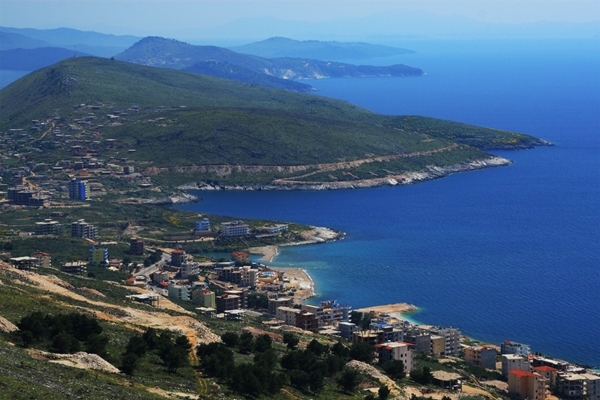
Albania, coastline 450 km, with geographic coordinates: 41N, 20E, with 28.748 km2 (11.100 sq miles), with population of 3.260.000 and density of 113.4 population/km2 is wild and mountainous, with extensive forests, sandy beaches and many beautiful lakes. It shares borders with Montenegro and Kosovo to the north, with the Former Yugoslav Republic of Macedonia to the northeast and Greece to the south. To the west lie the Adriatic and Ionian Seas.
Albania is one of the most mountainous countries in Europe with a rugged mountain terrain which covers 75% of the territory.
The average altitude is 708 m, two times higher than that of Europe.
It's major mountain ranges include the Northern Albanian Alps, Korabi Mountains and Pindus Mountains


Albania is very rich in biodiversity values.
There are 13 National Parks, 4 Protected Landscape Areas, 4 Strict Nature Reserves, 26 Managed Nature Reserves, 4 Natural Monuments and other protected areas.

Albania, coastline 450 km, with geographic coordinates: 41N, 20E, with 28.748 km2 (11.100 sq miles), with population of 3.260.000 and density of 113.4 population/km2 is wild and mountainous, with extensive forests, sandy beaches and many beautiful lakes. It shares borders with Montenegro and Kosovo to the north, with the Former Yugoslav Republic of Macedonia to the northeast and Greece to the south. To the west lie the Adriatic and Ionian Seas.
Albania is one of the most mountainous countries in Europe with a rugged mountain terrain which covers 75% of the territory.
The average altitude is 708 m, two times higher than that of Europe.
It's major mountain ranges include the Northern Albanian Alps, Korabi Mountains and Pindus Mountains
Albania is very rich in biodiversity values.
There are 13 National Parks, 4 Protected Landscape Areas, 4 Strict Nature Reserves, 26 Managed Nature Reserves, 4 Natural Monuments and other protected areas.
Subscribe to:
Posts (Atom)